Showing posts with label Being in the Audience. Show all posts

Sunday, 26 April 2026

Of Another Ending Or Just An Hiatus?

For many years it has been my great privilege and pleasure to organise a monthly session in Downham Market, Norfolk, for creators of original music and poetry. I inherited a "folk and acoustic music night" when the previous organiser needed to move on to other things. I'm trying to remember how long ago that was and I'm guessing around ten years ago, maybe more. 

These evenings started off at a café and shop specialising in selling and cooking locally produced food and beverages in Downham Market High Street called The Hop And Hog. It also had a licence for selling alcohol. The songwriter, musician and (presently four times published) author, Nico Dobben, knew the owner of the café and, along with musician and agit merchant John Preston, started the music and spoken word evenings. It was a place where one could order a home-cooked meal and enjoy not just the produce of local gardeners and smallholders, but also local musicians.

Sadly the Hop And Hog went out of business and we lost that very nice venue. If we wanted to carry on a new space for music was required. Rescue came when the new manager of Denver Windmill offered us a room at the mill. Although out of town the room was a good size albeit not easily accessible. One needed to be able to climb steep stairs inside and outside the building and dodge round the millstones to reach a room more usually used as a workshop space for teaching bread-making. It was during our time at Denver Mill that I took over the project. Seeing the number of very fine poets and songwriters among our regulars I felt that there was an opportunity to make a feature of original creations. Thus was Downham Songwriters & Poets created. People who wanted to perform covers or traditional songs had increasing opportunities among a growing number of open mic nights in the region. Again, sadly, there was trouble at t'mill and it too went out of business; we lost another venue. Was a pattern developing here? The Mill has since become home to another open mic session every month and also hosts regular festivals, the next one of which will be in one week's time.

In need of a new place for Songwriters & Poets I contacted the landlady of a pub back in Downham. I felt our numbers may improve if we were able to find a venue back in the town itself. For a few years we shared the bar at The Cock with locals who just wanted a quiet drink and, being a Friday night, members of the Norfolk Symphony Orchestra after rehearsals. The orchestra players disappeared after a while of tolerating us invading their social space and it was an ongoing issue to encourage a listening audience when people just really wanted to go to their local boozer for a night out. The number of people although good at first became a shrinking one and that made more apparent a tension between the political views of the regulars and the bunch of left-leaning dissidents who invaded their space. I found this quite an interesting situation as it gave me an opportunity to listen to and discuss with people completely outside my own echo-chamber. However, the differences came to a head in June 2016 on the day after the referendum to leave the European Union. Most of us were reeling from the way the vote had gone. As we gathered before the session began we moved chairs and tables into position in silence. Many of us were close to tears. The remain lobby had lost the vote overwhelmingly in our portion of the Fens. Our evening eventually got underway and was in something approaching full-swing when the vicar came in and delivered a sermon castigating "you lefty layabouts" who had never done a day of "real work" in our lives. He headed off any suspicion that a vicar might be accused of the same thing when he declaimed he had been a steel-worker in his pre-vicaring life, which he clearly felt qualified him for delivering his lecture. I had never spoken to him before and he knew nothing about me and, I suspect, nothing about most of the rest of our group. There was even less chance of any of us setting foot in his church after that experience. It was completely uncalled for and an arrogant imposition to interrupt our event. If ever there was a case of a man of god misreading a room this was it. Of course, the evening fell apart at that point and after that night we never went back.

Obviously we required yet another venue. There were other pubs in the town so we were not short of places to try. I took advice from those of our number who lived in Downham and one person sounded out the owner of The Crown. The Crown had a history as far as folk music was concerned. It had been a home of the old Downham Market Folk Club in the 1970s and possibly the 1960s and 1980s for all I know. My band, The News of the Victory, had played in the upstairs function room a couple of times in the 1990s, so it felt that moving to The Crown was a bit like a homecoming. They also had a number of function rooms, even after the upstairs hall had been converted to guest accommodation rooms. We were shown to The Stables that were occasionally used as a dining and function room and which had seen several changes of use since its venerable coaching inn days. We were told we could arrange it how we liked for our evenings. It was a completely separate space from the rest of the pub so there would be no need to disturb the regulars who weren't interested in the music and poetry. It was a good venue, with very easy access via our own entrance. There was no rent to pay with the pub benefitting from more bar sales and with even an option of food. For a time it looked like a good long-term solution. Sadly, once again events overtook us. The pub owner also owned The Jenyns Arms, a well established pub/restaurant at Denver Sluice. The Jenyns Arms was a popular, foodie restaurant. At some point the cellar was flooded and a lot of furniture was in danger of ruin. The Stables at The Crown was the only option for storage, so we lost that room. However, we were offered another room there. The Fox Dining Room was more compact and much closer to the bar. It was the space which felt most like the folk clubs I had known from my teenage years of going to folk clubs, although I don't recall another with a grandfather clock. The downside was that it was only accessible by a flight of five stairs, which were sadly beyond the ability of some of our regulars to manage. Then came covid and for us, as well as for everyone else, everything had to shut down.

Once we could eventually think of meeting again, we needed a space. A priority was for accessibility. One of our regulars suggested we try Discover Downham. It was the town's heritage centre, not quite a museum, though with plenty of artefacts on display, that had been converted from the old fire station. It was a nice enough room but lacking any of the atmosphere of any of our previous venues, there was no bar and we had to pay for room hire for the first time. There were also strict getting in and getting out limitations marked by the appearance of caretakers who jangled metaphorical keys. It did have a car park and our entrance was from the car park so in that sense it was convenient, but I never did get used to a complete lack of atmosphere apart from that with which our wonderful contributors - both performers and audience - endowed it. It definitely put the "function" into "function room". I acknowledge that the committee had attempted to add atmosphere via the display of artefacts and notices about the history of the town, but it certainly was not like any of our previous rooms with its fierce fluorescent lighting and noisy heating fans. I think the lack of a bar and having to pay for a multi-purpose space made creating an atmosphere more challenging. It was more like going to a parish meeting.

Like anything though else we got used to it and it has been a joy to be involved with some wonderful evenings of song and poetry there. We also attracted a small and loyal audience to support the performers. We had some people turn up speculatively and some grew into contributors to the evening's entertainment.

Now, though, it is time for me to hand it on to someone else. I don't know what Songwriters & Poets will become, though I suspect it will go from strength to strength. Many thanks to everyone who has turned up to support the evenings during my tenure. I have laughed, wept, shared my songs and poems and I have cajoled, counselled and encouraged new, aspiring  and returning performers. These last few years have provided a richness of local creativity that I shall treasure. It also made me feel part of a town I have always felt had something special, even when I have never lived there, except for times when I moored my boat nearby. I shall no longer be able to maintain that feeling, though for these years past I felt part of the extraordinary scene that Downham Market has encouraged. Maybe if I ever have to move on to land there are plenty of worse places to end up.

Monday, 13 April 2026

Of Busking Friends

You wait for one footdrummer to arrive and three turn up in the same place! I had to give my phone to someone to photograph three Farmer Footdrum players on the same patch of grass at Freaks In A Field 2025. All three of us have a lot of busking and performing experience to share even if we are often in different countries to do what we do best. From left to right in the photo Marshlander, Ruben Reeves and Cam Cole. 

Of course you know more than enough about Marshlander ... Ruben is from Australia and Cam is from everywhere including the second series of the television series, Ted Lasso. Both Ruben and Cam have a lot of their work on YouTube. For three musicians who use the same type of instrument we all have different syles and ways of playing. Perhaps our ways of working with the footdrums are almost as different as the styles of music we play.


And here I am with my friend, August Radio Project. We met up when he played the musical sections of the More Wonders Of Our Universe science show in Boston in 2025. I should learn to smile more. After all I was very happy to meet him in the flesh at last and he is very, very good at smiling!


Of The Joys Of A Septuagenarian Fanboy

It's surely a given that I've always loved music. As a child I heard it on the radio and on the collection of fragile Bakelite 78rpm records owned by my parents. If you dig deep enough through my early memories you will discover that rather than risk their precious records being broken by a clumsy, but enthusiastic three year-old who simply wanted to hear music and dance, they would teach me to use the family's wind-up gramophone. Apparently as a two-year old I could pick out any song from the collection of records anyway. Adult members of the family often tried to catch me out, but it seems they never could. No one knew how I managed to identify individual songs on the A or B side of a stack of discs and I certainly couldn't tell you now. These days I can barely remember what's on the latest cd I have bought. I suppose I should really say something about the importance of dance in my family. That will have to be for another post.

Live music was a treat reserved for an end of the pier variety show during an occasional day out, a London park bandstand encounter or an even rarer family holiday. It was under the last of these circumstances that the first live music performance I can recall is a set by the Buddy Rich Big Band, though, of course, I had no idea of the significance of the band leader. When The Monkees became an irresistible phenomenon I was completely caught up in it and begged my parents to take me to their first London performance at The Empire Pool in Wembley. A year later my tastes had expanded and my parents took us en famille to the Babylonian Mouthpiece Show at the Royal Festival Hall featuring Tyrannosaurus Rex, Roy Harper, David Bowie and Steffan Grossman. After that I went to as many gigs and concerts as I could. I was indeed fortunate that I lived close enough to several excellent venues and the Hyde Park free concerts were just a train and tube trip away.

Last night I enjoyed the Gigspanner Big Band for the umpteenth time. 

Gigspanner Big Band at The Apex, Bury St Edmunds a while ago stolen from the band's website - I'm in the audience but obscured.


Gigspanner Big Band at The Apex, Bury St Edmunds a while ago stolen from the band's website

Most members of the band have become, at the very least, acquaintances and I would venture so far as to say that one has become a friend. I cannot praise highly enough the joy that the skill and constant invention and enthusiasm of the six experts in their metier brings me each time I see them. The set list may look the same or similar, but no night has ever been truly like another. Last night was no exception and I felt they were even stronger than the last time I saw them. As people they are all thoroughly lovely and I do so enjoy spending time in the company of the band members. Despite being very short of savings after the recent boat troubles I bought a weekend ticket for this year's Ely Folk Festival this morning mainly because they are playing. Of course, Ely Folk Festival is as big as I ever like to go these days in terms of the number of people in attendance and it is spread out over a site large enough to offer me some breathing space. Last year a committee member who had seen me on the Kingfisher Stage a couple of years previously asked me if I had got my ticket yet. When I declared I probably would not be coming he said to let him know if I wanted a ticket. I had planned to go to Strumpshaw Tree Fair last year, having never been before, and they clashed. In the end Ely won and I am really pleased it did. I had a great time and I wanted to "pay" for my ticket by playing some guérilla sets around the site, which I did, including playing for two or three hours by the entrance to the field before any of the official programme started up. The stewards were very happy and very complimentary. Another memorable encounter was an impromptu duo with my friend Fara, improvising around Lean On The Tiller for our mutual friend, Nick Penny. I'd like to do the same again this year despite having now purchased a ticket through the official source. 

I also managed to get back to the It's Not The End Of The World Festival, Freaks In A Field and Banterfest. They are all very different styles of festival, but all are deliciously bijoux and I feel more joy when I meet up again with friends from previous events. Not the End and Freaks are also very affordable ... The Sanger Stage is also my favourite stage to play and Dave Sanger took it to both events. At Not the End Of The World I played two sets on that stage, opening and closing the Friday evening. The Sanger Stage is a traditional showman's stage drawn by horses and is certainly a thing of beauty.

Marshlander on the Sanger Stage at It's Not The End Of The World 2025

Ticket prices are an important consideration for most people. Apart from the fact that I don't like big festivals or big concerts I can't afford them anyway. I'd much rather see, say, The Crazy World of Arthur Brown in a club setting such as Club 85 in Hitchin, Esquires in Bedford or The Lexington in Islington. Even at my age it is a joy to discover music that excites me. Music I can say I have found recently that really excites me includes the work of Ren, The Gulls, The Big Push and other Brighton area buskers including August Radio Project. I may have mentioned previously my love of the Norwich-based project, The Neutrinos and Klanghaus. I try to see them as often as I can. Recently I came across a flurry of activity concerning the Quebecois duo, Angine de Poitrine and I would certainly like to see them perform their magic in a live show. Three dates on the upcoming tour were advertised as being in the UK at less than £20 each and all were sold out. They will be returning to the U.K. later in the year, but the ticket prices have doubled already. Of course, live performance is just about the only way bands have access to people who will buy the merchandise that keeps them touring, but I have a price above which I cannot afford to go. Tickets become available for some new events by Sparks later this week. They are, of course, much bigger and more popular than they have been since the mid-1970s. I'm trying to work out if I can afford to see them this year. I suppose the question is, now the tickets are so much more expensive, can I go without going to see them for the sixty-first time?

Monday, 15 March 2021

Letters To A Kingfisher - 9

Dear Mr Kingfisher,

Thanks for coming to see me this morning. I know you were too busy to stay long, but there was just time for a greeting before you had to go.

In two days' time it will be precisely one year since I have seen my lover and partner, P. Being apart and in different countries for all this time has been horrible. Not as horrible as catching covid I suppose, but we have to play the hand we are dealt. I am so looking forward to being allowed, and feeling safe enough, to go back to France. This period of enforced isolation has been not so different from my normal life in many ways, but in others it has proven very difficult. I am frustrated that I have not felt able to make good use of the time to work on musical projects; I certainly have enough half-started songs to finish. I've put that down to mild depression, something I do know about, but again that isn't the whole picture. I think the lack of purpose is what hurts most. If I have a performance coming up I practise and rehearse. I am not so consistent without the focus. I have also really missed going to see and hear live performances and I think that has also affected my productivity. I try really hard to avoid plagiarism, but a live show is often a stimulus for new musical ideas to begin rattling around in my head. I think it is the joy of witnessing music making in real life. A new idea may manifest as something "in the style of" and, only rarely, do I have to discard that idea completely because it turns out to be a copy of something I heard at the gig. I only have to discard it if it is irredeemable rubbish. The ideas have not been forthcoming, so I've not been writing much.

As always, there are conflicting items of news. I have a sense of optimism that the lockdown may begin to ease next month. As things stand it may be a further three months after that, before I can pick up where I left off a year ago. Of course, nothing can be set in stone, but there appears to be more optimism that we are on the mend. If, however, relaxing the lockdown rules also leads to increased cases of covid I really don't know how I'll deal with another lockdown. It may not go well. Of course, it helps that this week the sun is shining and I can power my devices, including this laptop, through my solar system. It is by no means warm, but I can wear shorts fairly comfortably outdoors. On the pessimistic side, I wonder if the weather is simply much nicer than it ought to be. It is March and I am wearing shorts. What will the temperature be like in high summer? We have had a lot of rain over the past few weeks and even more wind, but has the rain fed the aquifers sufficiently? So yes, it is wonderful to be contemplating the possibility of freedom of movement ...

Freedom of movement, there's a phrase. My next visit to France, whenever it happens, will be under very different rules and international relationships. I have no idea how the routines I developed for travelling to and fro will be affected by the fact that my movements are now subject to rules that haven't existed for the past forty years. Travelling to the USA has always felt more like travelling to a foreign place than travelling to France, but I fear that France may begin to feel more like a foreign country now. Whenever I mention a concern on a social networking site my trolls appear. One writes detailed responses that never seem quite to address what worries me and he usually admonishes me along the lines that I should have more "faith in my country", "depends whether you are a glass half-full or half-empty ..." kind of way. Yadda-yadda, yawn. Covid has complicated the whole picture with regard to leaving the European Union in an ill-tempered and discourteous way, but the figures seem to suggest that the effect of covid on people's livelihoods has been exacerbated by the negative aspects of Brexit.

The past weekend has brought to the headlines another important aspect of freedom of movement. I don't want to get into discussion on some of this, because I don't have a valid contribution to make. As a white male in my senior years my place is primarily to listen. I have heard female members of my family talk about some of their fears and experiences of being out and about on the street. I realise that some places feel very off-limits to them and the tales I have heard make me ashamed to be a man. The fact that I am constantly checking myself to ensure I don't add to the litany of acts exhibiting "toxic masculinity" is nothing compared to having to look over one's shoulder all the time and have to decide whether or not it is safe to walk this road or that, to challenge the cat-calls, the overt or soto voce insults, acts of intimidation, sexual or physical abuse apparently random and so casually committed, or ignore them. Until everyone feels safe going about their own business we do not have a free society. Being imprisoned behind the walls we have erected for our own safety is not acceptable.

This weekend we witnessed the police giving us a taste of a dystopia into which we are crashing at speed. It would appear that women holding a peaceful, socially distanced vigil were kettled and attacked by the police. The Home Secretary is pushing through legislation to curb our rights to express dissent. If the events of this past weekend are anything to go by little distinction in future may be made between holding or taking part in a vigil, a protest, a rally, a demonstration or a full scale riot. Under the proposed legislation it would appear that all these will be classified as acts of public disorder. These proposals to curb the freedom to express dissent are the most serious breaches on our liberty to assemble freely since the second world war.

So, Mr Kingfisher, what's going on in your world? I assume you are sprucing up your nest in preparation for this year's brood?

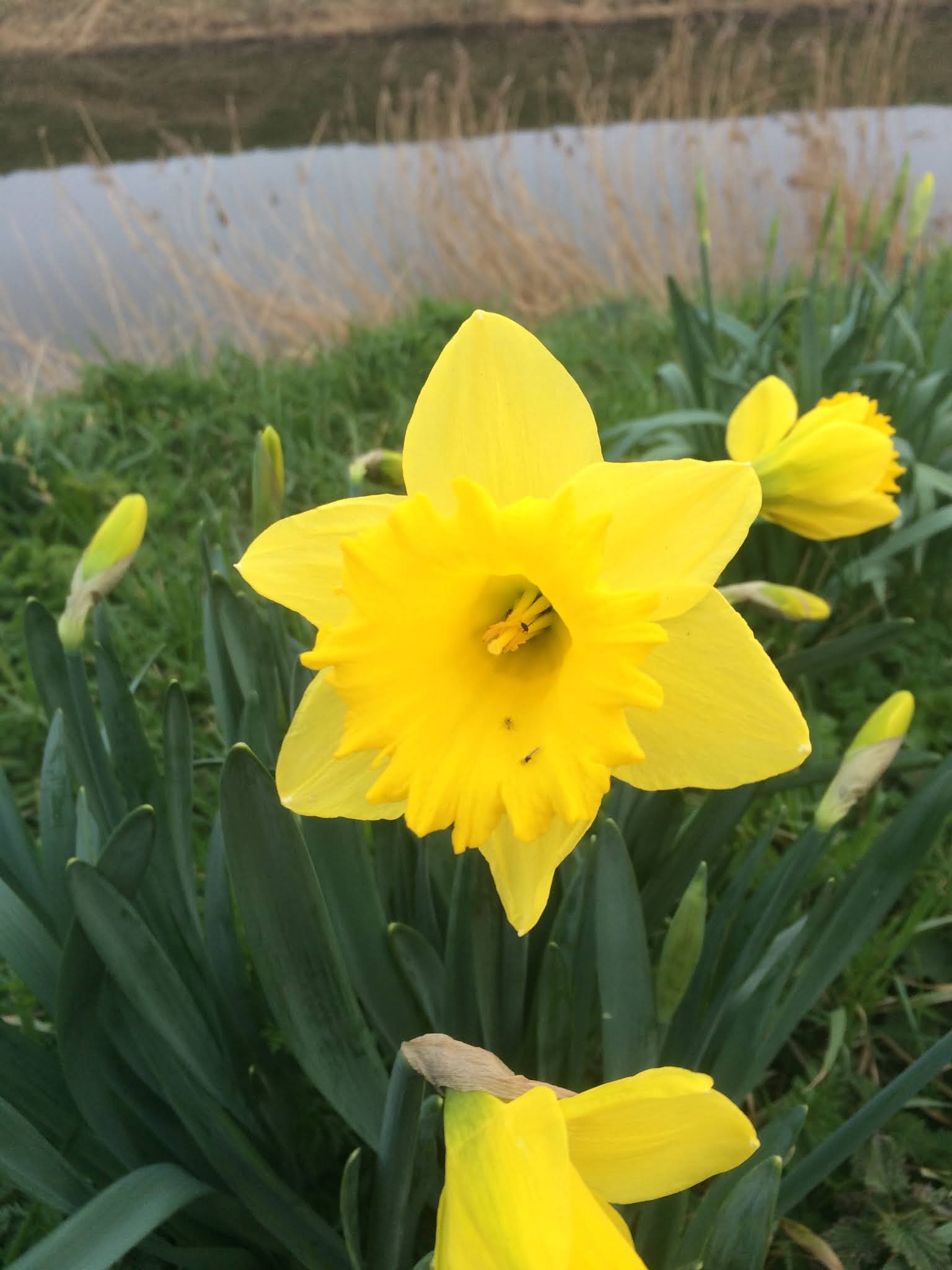
Here are some daffodils I photographed on the river bank recently. I hope you enjoy them.


Best wishes,

marsh

Saturday, 14 November 2020

Of Pasts and Passing On

The news reported the death of John Sessions recently. It was a bit of a shock because he was only two years older than I am. I know this because he was two years ahead of me in school. We attended the same secondary school in the Home Counties and I became aware of him fairly soon after arriving there. That in itself was unusual because, although it was far more likely that the only reason boys two years ahead made contact with the "new halos" - our navy school caps had a bright yellow ring around the head - would be to beat them up, John was not like that. Such a "welcome" had been my experience in the past. I rather hoped that a mass influx of boys into the new institution would provide some herd immunity.


John Marshall, as I came to recognise him, was not interested in establishing his place in the pecking order by physical interaction. He had no need. He had something of a penchant for climbing on to a table and putting on a show, usually imitating perfectly any teacher in the school. I thought he was brilliant and I was often one of a crowd of younger boys egging him on in these performances. He did not need a lot of persuasion. Occasionally, though, he scared the life out of me. 


I wasn't specially happy at school and some places were very dark indeed. The p.e. department was staffed by psychopaths, one of whom had no place being allowed anywhere near children. I avoided him at all costs, but one day he dragged me out of a rugby scrum by my hair screaming abuse at me and shaking me so hard I couldn't stand up. I must have done something to displease this lunatic, but I never did find out what. His verbal correction was a torrent of noise that carried no meaning. I lost clumps of hair for days after that incident and experienced the trauma of it for weeks.


The sunlit back corridor that led to the gymnasium had another dark space, the infamous Room 11. The classroom had windows facing north and, with its half-drawn blinds, was a very gloomy room indeed. Had it been situated in the basement it would have been the school's equivalent of Room 101 from George Orwell's 1984. Room 11 was the demesne of Bullet. No teacher in the school would ever earn legendary status if he had not been awarded a nickname known and used throughout the school that was passed on to successive cohorts of innocent pupils. Some teachers had nicknames used by one class or year group, but they were clearly of a lower order in the school pantheon.  Consequently, alongside Bullet, I was taught by Prang, Soupie, Solo, Peanuts, Bo, Dum (not Dum as in Dumb - this was Latin pronunciation for the Latin teacher), Jerry and others whose names I shall probably edit in if they come back to me from more than fifty years ago. Second division (usually less a reflection of their professional skills than a notoriety associated with particular quirks of character) teachers were known by contractions or extensions of their surnames or by their given names if we thought we knew them. Among these I can remember Alf, Chris, George, Josh, Wee Ado, Don, Jack, Jack, Gus. Ma and Pa were the affectionate names we used for a married couple who taught different subjects. Ma taught R.E and English and I liked her a lot. I'm not sure she liked me when, in my innocence, I regurgitated racist and exclusionist Mormon theology. One day an off-the-cuff remark from her sowed a seed that challenged me to examine the nature of conscience. That seed bore fruit many years later. I believe Pa went on to become the head of the school for a few years. However, whoever the teacher, John could mimic them all. I'm sure many were flattered by his attentions although it would not have been appropriate to show it.


There was no sign over the door to Room 11, but had there been it would probably have read, "Abandon Hope All Ye Who Enter". In contrast to the gloom of the room itself the corridor had windows at head height looking out south over a courtyard and in my memory the sun shone as perpetually into the corridor as Room 11 saw its natural light sucked out. The corridor mocked the impending forty minutes. Bullet demanded we sat in alphabetical order of our surnames in class. So conditioned were we it took me nearly a year to become the first boy in our year group to challenge the custom of referring to or addressing other boys only by their surnames. It took some boys much longer. In order to facilitate the most orderly entrance into his dungeon Bullet demanded we line up in the corridor in alphabetical order too. Once in the room the command would be issued, "Bags and baggage on the floor". It's funny how memories reappear if one gives the reminiscences a bit of a stir. I can hear Bullet intoning the command now. No one else spoke in that very measured way. There was a rumour he had a metal plate in his head from the war and his whole demeanour was of menace in its purist form. I could not imagine him having any friends on the staff or even that he knew any of the names of his colleagues. He was alone, fierce and sometimes single-handedly filled after-school detentions with boys who had contravened his rules for order in the classroom by dropping a pen, not having the right books, entering the room out of alphabetical order, coming in late or, worst of all, failing to cover their exercise books with brown paper or hand homework in on time. No excuse was acceptable. Absence on a day homework was set required the absentee to borrow someone's book and copy up the notes and complete the homework just the same. Notes were dictated verbatim or copied from the board. I had always found maps and atlases fascinating. Whenever I went anywhere I bought a map. I had boxes of maps at home.  Considering Bullet's subject was geography and teaching me should have been like barging through an open door Bullet did a fine job of nearly ruining that for me. Map outlines came from a rolling ink stamp that he printed into our geography books, one at a time, during the lesson, starting with the 'A's on the front bench all the way through to the 'W's and 'Y's at the back. In other classes such unproductive use of the time would have found boys whispering or chatting. No one whispered or chatted in Bullet's lesson. A smack on the side of the head from behind was just as likely as he loomed over each boy with ink pad and roller if he encountered anything of which he disapproved. It was the only lesson where no one spoke unless asked a question directly. In all my years in education on both sides of the desk I never encountered anyone else like Bullet. I learned how to plot contour lines to show the profile of an elevation (ask me about George's Island or Woofmonk Island sometime). I learned that the English pronunciation for Lyons, and Marseilles had to be Li-ons and Mar-sails unless we were prepared to pronounce Paris "Paree" and no one dared do that outside of Bo or Gus's French lessons.


One day, having Geog as the first lesson after morning break I headed to my place in the line outside Room 11. I was eating a Walnut Whip I'd bought in the break time tuck shop when I heard the nasal drawl of Bullet issuing a command. I hadn't seen him arrive and, as George Orwell colourfully described in a phrase that I came to understand could be a real thing, my bowels turned to water. In my panic I nearly choked attempting to swallow the marshmallow confection whole. I didn't fancy being put in the detention book for eating in the corridor. Then I realised it wasn't Bullet at all, but John bloody Marshall. My relief was a tangible thing that day.


The subject I probably enjoyed more than any other at school was English. I wanted to enjoy art too, which in the main I did, but I just wasn't very good at it. I achieved the difficult task of actually failing my art O'level, but English I managed to enjoy and had a bit of a crush on a couple of my English teachers. Since I first learned how, I have always loved to read and also to write. The only thing I had difficulty with in English was thinking. I really wanted to do well, but I found it difficult to remember things and I found the analysis difficult too. I think the teachers who made a good impression on me and for whom I actually wanted to do my best were some of my teachers of English. Chris was one of those and Don was another. Hearing Chaucer read aloud for the first time ever by Don was a revelation. I fell in love with the sound of the language. 


I addition to teaching Eng. and Eng. Lit. Don also produced the annual school play. One year he decided to mount a production of The Tempest. Several of my friends were keen actors, some of them auditioning successfully for parts in National Youth Theatre productions with a couple going on to act professionally. I'd done a bit, but I wasn't really comfortable on stage. I had grown up listening to my mother telling me stories of how she had been on stage in Liverpool and London as a child, before her illnesses and the war intervened though I've never really got to the bottom of how those gigs came about - although I think school productions played a part. I suppose I should have asked more questions, but she was always very keen to support if I ever showed an interest in any vaguely theatrical activity. I joined my friends in auditioning for The Tempest and was given the part of Sebastian, not a particularly nice character, but I don't think I really understood that at the time. During my adolescence I was prone to chest infections, bronchitis and asthma and, after spending several months learning and rehearsing the part I came down with bronchitis about ten days before the curtain was due to go up on the first of a three night run. School productions being often run on hope, understudies were in short supply. However, I was not overly concerned. By that time I knew the way these bouts of illness played out and I was sure I would be well enough and back at school for the show, probably even for the dress and technical rehearsals. However, Don was not so sure. He showed his concern by actually coming to our house to see me and talk to my mother a few days before the play opened. A teacher coming to the house in those days was very unusual. He wasn't prepared to take a chance on me so he said he would see if he could find an understudy. He found a volunteer who stayed up all Wednesday night before the show opened the following day and who learned the part in one sitting. His Sebastian went well enough so Don told him he could play the final night on Saturday too. All my months of work amounted to a single, probably lacklustre, rendition on the Friday. It felt so unfair and when I tried to argue my case Don said that it was perfectly fair because this understudy had taken the trouble to learn the part at very short notice. I wondered how learning a part overnight and avoiding going through the gruelling months of rehearsal made it fair. Don said I could watch the show without having to buy a ticket - big deal. To be fair John Marshall (yeah, him again - the  future John Sessions) was pretty good. There's a part in the play where Sebastian is called upon to laugh and John's laugh was definitely better than mine. He brought me new insight. I'd never have thought of rolling on my back to deliver that laugh. John was inspired and I hated him for it for a very long time. I never attempted to audition for a school play after that.


John disappeared from school shortly after. That may have been the time he moved to go to school in another town. I saw him - or thought it was him - once more under very unexpected circumstances in 1977. That was the year of my final teaching practice. The junior school in which I had been working was finishing the year by taking the class I'd been teaching to York for a week on the annual school trip for the children about to move on to secondary school. I had to get special permission from college to be one of the adults on the trip. The class teacher knew my interest in Early Music and dance and asked me if I would like to take four children to a performance of the York Mystery Plays which coincided with the visit that year. We talked about which children would be likely to get the most from the experience. I certainly was enjoying the experience and the responsibility, but was less entranced when I thought I recognised Lucifer ... or was it Satan. The voice was familiar and the laugh was unmistakable. I didn't get the chance to renew our acquaintance because I had to get the children back to the hostel and that was the last time I saw John in real life. It was also the first time I was aware he used a different name. It certainly wasn’t Marshall. but I don’t think it had yet become Sessions. It was only several years later that he emerged as the rightfully lauded writer and performer he became. I read recently some mention of his years of illness and problems with stage anxiety. I never saw that John Marshall. My condolences to his family and friends, of which I assume there are many.

Wednesday, 18 March 2020

Of Influential Albums 7 - Panorama de musique concrète by Pierre Henry and Pierre Schaeffer

Some time in 1970 I went to St Albans Music Centre one day to buy some guitar strings. I was also on the lookout for some "electronic music". I already had one album of purely electronically generated sound, but I wanted to find something with a more organic feel to it. John Fahey's album , "Requia" had introduced me to "concrete music" so when I saw this album, even though I knew nothing about the composers or their music, I bought it. It was also a curious package and it stuck out further on my record shelf than all the other records. That bit made it annoying!

What a revelation. For a long time I could not or would not listen to Pierre Henry's dramatic cantata, "Le Voile d'Orphée" at night. It just was too emotional an experience. I've since purchased more of Henry's music. It continues to amaze. I shan't list the tracks. In that very 1950s way, they are listed on the front cover,


Monday, 16 March 2020

Of Influential Albums 6 - Anthems In Eden by Shirley And Dolly Collins

This album was pivotal in expanding my musical knowledge. I learned many of the songs and remember getting into trouble for singing "Nellie The Milkmaid" at a church "talent evening"! The "bishop" told me I ought to give up singing "worldly songs". He'd be horrified at some of the songs I've written since I hope ... like the evangelical pastor who rushed away in disgust and disbelief at a festival last year. That was okay, he wasn't invited to harass people the way he and his congregation did anyway.

Importantly for me though was that, not only did "Anthems In Eden" inform my growing interest in traditional English folk song, but it was probably how I was introduced to the music of David Munro and the Early Music Consort of London, who soon became a hero to me. It was after buying and listening over and over to "Anthems In Eden" that I found my old Dolmetsch descent recorder and started to tootle again for the first time since I left primary school some three years earlier. I used the recorder then occasionally in the bands I played in and I have used it even more occasionally since. I may have to put that right if I can get my chops up again. I do have some very nice recorders that really ought to be used more often.

Later, at college, I took up the recorder as my main instrument. I began as a non-reader, but put in a lot of work to get through all the grades. Unfortunately teachers I engaged often died soon after. I hope it wasn't the strain of having me as a pupil. Through my first recorder teacher at college, the wonderfully patient and encouraging Margaret Horton, I met the director of an early arts performance company that consisted of some thirty instrumental musicians, singers, dancers, actors, costume designers/makers and makers of historical instruments. The company recreated Tudor "court entertainments", usually in stately homes and other authentic settings and less authentic but prestigious concert halls as well as medieval performances that mostly happened in cathedrals. By the time I was 22 I had performed in the Purcell Room, the Queen Elizabeth Hall, the Whitehall Banqueting Hall and cathedrals up and down the land. I carried on singing, dancing and percussing with this company for many years. It was a wrench to have to give it up when I moved too far away to attend rehearsals regularly.

Some years after qualifying as a school teacher I found another recorder teacher, Dale Noble, who took me on and coached me through the practical element of taking my "letters". It would take me a very long time these days to work up the Sammartini Recorder Concerto or the Lennox Berkeley Recorder Sonata again, but that experience all began with this record. These days, of course, most of my available practice time is given over to Marshlander repertoire, although just occasionally I grab a recorder ... 😎


Original 1969 tracks
1- "A song-story" (A Beginning/ A Meeting/A Courtship/ A Denying/ A Forsaking/ A Dream/ A Leaving-taking/ An Awakening/ A New Beginning)

The songs are: "Searching for Lambs", "The Wedding Song", "The Blacksmith", "Our Captain Cried", "Lowlands", "Pleasant and Delightful", "Whitsun Dance", "The Staines Morris" All traditional apart from "Whitsun Dance" (words by A J Marshall)

2- "Rambleaway" (Traditional)
3- "Ca' the yowes" (Robert Burns)
4- "God Dog" (Robin Williamson)
5- "Bonny Cuckoo" (Traditional)
6- "Nellie the Milkmaid" (Traditional)
7- "Gathering Rushes in the Month of May" (Traditional)
8- "The Gower Wassail" (Traditional)

Saturday, 14 March 2020

Of Influential Albums 4 - The Transfiguration of Blind Joe Death by John Fahey

To my great regret I never saw John Fahey play live. I have several John Fahey albums, many of which I bought in the early 1970s. By 1975 I think I had nine of his albums. My friend, Simon J (who now presents "Simon J's Jazz Mash", weekly on Scotland's Radio 242)   also had nine John Fahey records, but he had a completely different nine.  Every so often I buy another John Fahey recording, but sadly he died in 2001 at the age of just 61. He also wrote and published books and he painted. Some of the books gave the impression of being autobiographical, but, being John Fahey, one could never be sure! His writing throws liberal doses of fiction among the facts and it is hard to tell which is which. He did write a definitive biography and study of the music of Charlie Patton, which earned him his master's degree. He was also responsible for tracking down and recording long-lost blues musician, Bukka White. John Fahey was a complete enigma. Despite considerable popularity among 60s alternative types, he despised the whole hippie culture. It was a connection that must have been hard to shake off because, like many, I first came across his music on John Peel's Perfumed Garden broadcasts from the pirate ship Radio London and his music was also played on the distinctly underground station, Radio Geronimo.

John Fahey mostly made his living buying and selling blues and old time records before he grew in demand as a performing musician. A few years ago I was able to find and buy his first album, which he released on his own label in 1959. It was a shock to realise how much better he became as a guitarist after that album. He sometimes described his style of playing as American Primitive, but that didn't tell the whole story. Listening to John Fahey one can hear a massive range of influences. It was through John Fahey that I first encountered Musique Concrète as well as the music of Charles Ives. Early on he was given the nickname, "Blind Joe Death" by fellow blues fans. The fictional Blind Joe Death featured on some of his early releases, including this record. 

My Uncle George loaned me a Zenith cello guitar in 1969 (now back in my possession fifty years later) and, every Wednesday night, my father drove me over to Luton to chug through pop songs from sheet music with two other guitarists and the bass player whom he knew through his church connections.  That was how I started to play guitar - the first song I chugged through was Procul Harem's "A Whiter Shade of Pale". We also played lots of early Beatles songs. One of our little group, D, became a very close friend and we are still friends to this day. D worked hard on his guitar playing and was soon far ahead of the rest of us. He was teaching himself fingerpicking technique through listening to Davy (or sometimes Davey) Graham, Bert Jansch and John Renbourn records. John Fahey became my guitar tutor of choice. "The Transfiguration of Blind Joe Death" was the first John Fahey record I bought and I realised that I had a good enough ear to begin to pick up what he was playing on many of the tracks. I learned to play "Brenda's Blues" at first. Then I managed to pick up passably recognisable versions of "Beautiful Linda Getchell", "Tell Her to Come Back Home" , "101 Is a Hard Road to Travel", "How Green Was My Valley", "Old Southern Medley", "Come Back Baby", and "Poor Boy". My proudest achievement, though, was working out how to get my fingers to pick in 3/4 time and being able to play Fahey's version of "Bicycle Built for Two". I never really got into the multiple tunings except for managing to play the tunes that required a bottleneck. I suppose I was still working on being able to play these tunes as well as some of the others (particularly from later albums "The Yellow Princess" and "Requia") when I really should have been studying for my 'O' levels. I achieved somewhat modest results with my 'O' level exams. Guitar felt more important. I'm still learning and trying to improve after fifty years. Incidentally, D was responsible for my earliest performances in folk clubs when we wrote and played for a while as a duo. We were also best men at each other's weddings. He's still married and lives in the USA.


Side one
  1. "Beautiful Linda Getchell" (Fahey, L. Mayne Smith) – 1:50
  2. "Orinda-Moraga" – 3:55
  3. "I Am the Resurrection" – 3:00
  4. "On the Sunny Side of the Ocean" – 3:00
  5. "Tell Her to Come Back Home" (Fahey, Uncle Dave Macon) – 2:45
  6. "My Station Will Be Changed After Awhile [sic]" – 2:02
  7. "101 Is a Hard Road to Travel" (Fahey, Macon) – 2:17
Side two
  1. "How Green Was My Valley" – 2:15
  2. "Bicycle Built for Two" – 1:10 (arrangement of the 1892 song, "Daisy Bell")
  3. "The Death of the Clayton Peacock" – 2:52
  4. "Brenda's Blues" – 1:45
  5. "Old Southern Medley" (Fahey, Stephen Foster, Charlie Patton, Daniel Decatur Emmett) – 6:08
  6. "Come Back Baby" – 2:15
  7. "Poor Boy" (Fahey, Bukka White) – 2:25
  8. "Saint Patrick's Hymn" (based on "Saint Patrick's Breastplate") – 0:55

😎Someone out there might recognise that I plagiarised the title of my essays on this year's Venice adventures from John Fahey's second album "Death Chants, Breakdowns and Military Waltzes" recorded in 1963 ...

Of Influential Albums 3 - Folkjokeopus by Roy Harper

"Folkjokeopus" was Roy Harper's third album. It is pretty much a given that there would be a Roy Harper album in this list. I had not heard of him before I saw him live at the Royal Festival Hall in 1968 supporting Tyrannosaurus Rex (as were David Bowie and Stefan Grossman). After that I saw him many times over the next few years. His guitar style was different from that of most of the other acoustic musicians I followed. Some of this was, I believe, influenced by playing the oud during time spent in Morocco. I suspect Davy Graham may have also been an influence. He used open tunings and played extended improvisatory passages, particularly when playing live. "One For All" on this album is a great example of that. His song introductions were often quite extensive and rambling, which I liked too, although I understand if there were people in the audience who became impatient to hear the music! He engaged with the audience. His songs plotted a course that had been set by Bob Dylan. His lyrics often expressed an antipathy to authority, which of course was very attractive to a thirteen year old rebel. He sang with his native NW English accent and neither tried to emulate the American accent of so many singers at the time nor the bleating of the traditionalists. I loved the way he was able to slip into his falsetto voice, ("She's The One"). He was angry and it showed. He railed against authority, he sang about sex, he drove a coach and horses through stupidity.

I love "Folkjokeopus", still listen to it and it is the one that has so far probably had the biggest influence on my work. The first album of his that I had bought was the preceding one, "Come Out Fighting Ghengis Smith", and having encountered him live as a soloist I wasn't keen on the orchestrations on that album. This one is less densely textured. Where other musicians were employed it was more a band format than an orchestral one. I taught myself to play some of the songs on "Folkjokeopus" and set about the monumental task of learning the eighteen-minute epic, "McGoohan's Blues". I can't claim that I understood it, but the song touched me somewhere at a very deep level. I never was able to commit it to memory. I saw Roy Harper play in London a few months ago. He was well into his seventies, but his voice was still amazingly strong and I was very impressed that he only forgot one verse of "McGoohan's Blues" - quite an achievement! I aspire to be able to create something of similar depth and quality. Some of the chord sequences used on "Folkjokeopus" found their way into some of my teenage attempts to write songs. I guess many an aspiring songwriter is a plagiarist in their early attempts.

I spent many happy hours reading the tiny writing on the graffiti style back of the sleeve. Apart from "McGoohan's Blues" my favourite songs on this album included "She's The One", "The Composer of Life", "One For All" and "Exercising Some Control". I wish I'd remembered that Clem Cattini played drums on "Folkjokeopus". I met Clem a few months ago and we had the opportunity for quite a long discussion about some of the work he'd done. Had I remembered I would have talked to him about this album for sure.


Side one
1. "Sgt. Sunshine" 3:04
2. "She's the One" 6:55
3. "In the Time of Water" 2:16
4. "Composer of Life" 2:26
5. "One for All" 8:11

Side two
6. "Exercising Some Control" 2:50
7. "McGoohan's Blues" 17:55
8. "Manana" 4:20

Friday, 13 March 2020

Of Influential Albums 2 - My People Were Fair And Had Sky In Their Hair ... But Now They're Content To Wear Stars On Their Brows - Tyrannosaurus Rex

This is one of the first albums I bought when I was just six weeks into my teens. It may be the one I have most eagerly anticipated too. People finding out about music for the first time in these present days of fan websites, social media, e-mail notifications, instant downloads, pre-releases, MP3s, streaming services and the rest of it can have no idea of what it was like when vinyl was the only format and there was no web. Information about new releases came from DJs on the radio (usually the BEEB, Radio Luxembourg or one of the independent broadcasters, many of whom at the time were "illegal"), from television's "Top Of The Pops" on Thursdays and later "The Old Grey Whistle Test" that came on way after bedtime, or from the music press. I pestered our local electrical shop for weeks in advance of the release of Tyrannosaurus Rex's first album. Electrical shops were often the only places to buy records in many towns like the one where I lived. Every week the man behind the counter would consult his Billboard list of new releases to no avail and it seemed like it would never arrive. Until this time I had bought mostly singles. At 6/8 a pop (six-and-eight or six shillings and eightpence to any youngsters reading - about 34p in "new money"), singles were expensive enough, but an L.P. (what we now call an album), at 32/6 (one pound, twelve-and-six = £1.62.5), was nearly three weeks of the hard-won money I earned from my new early-morning paper round.

John Peel had played Tyrannosaurus Rex on his weekly Top Gear radio show and his Wednesday evening mixed arts programmes for months. I had followed John Peel's selection of music from the days he first appeared on the pirate broadcaster, Radio London. He featured Tyrannosaurus Rex every week, often in live session. He probably played them more than he ever played anyone else. I was completely hooked. I think it was listening to Marc Bolan that started me thinking that I would like to play guitar. I had long had an interest in writing poems at school, so I tried writing songs, many of which came out as dreadful copies of Marc Bolan's songs. My favourite half of the duo by far though was Steve Took - Steve Peregrin Took (there was a lot of Tolkien in the air during 1967's summer of love and beyond). His hand drumming and backing vocalisations took Marc's songs to another world entirely. I was very sad when he split from what was to become the travesty of T.Rex. I'm sure Marc would have kept the faith had Steve not had to leave! I saw them live that year and followed them fanatically through the second album, "Prophets, Seers and Sages, the Angels of the Ages", and the third, "Unicorn". I bought Marc's book of poems  "The Warlock Of Love", the moment it was published. When I was at the third Isle of Wight Festival in 1970, "Ride A White Swan" was on very heavy rotation between the live performances. It signalled the end of a beautiful relationship. 

If I played covers in my Marshlander sets, I would be very tempted to try and cover "Strange Orchestras" - Steve Took at his finest, I think. He made the mistake of suggesting to Marc Bolan that the duo could try recording some of Steve's own songs ... often a signal to an imminent departure of a member of the band, ask Martin Gordon, ex-Sparks.


Side A
1. "Hot Rod Mama" 3:09
2. "Scenescof" 1:41
3. "Child Star" 2:52
4. "Strange Orchestras" 1:47
5. "Chateau in Virginia Waters" 2:38
6. "Dwarfish Trumpet Blues" 2:47

Side B
1. "Mustang Ford" 2:56
2. "Afghan Woman" 1:59
3. "Knight" 2:38
4. "Graceful Fat Sheba" 1:28
5. "Wielder of Words" 3:19
6. "Frowning Atahuallpa (My Inca Love)" 5:55

Thursday, 12 March 2020

Of Influential Albums 1 - The Paul Simon Songbook

One of those odd challenges came up on my personal social media page a couple of days ago. A musician friend of fifty years' standing "nominated" me to list ten albums that I felt had influenced my work. Having just listed ten favourite albums I wondered what the difference would be. As it happens there is a difference. Some of the same artists have actually appeared in both lists, but not necessarily the same albums by those artists. While the social media game only asks for the list, I thought it might be a more interesting challenge to try and explain why I feel certain albums influenced my work. This series of essays might well extend beyond the ten in my friend's challenge, but I'll see. I'll start by going over some of the reasons for including the ten on my social media page.


The Paul Simon Songbook is not the first album I bought. In truth I never actually bought it, but somehow I acquired it. I think it was amongst a pile of records my father brought home from somewhere that was throwing them out. This would have been one that didn't particularly interest him. It was either that or one my uncle passed on to me - I have a few of those. Uncle George was an original folkie and skiffle man. He knew and sometimes played with some of the performers I would see in folk clubs and festivals in the early 70s. I would have acquired this album around 1967/68, I suppose, some two or three years after it was recorded and released in the UK only. It wasn't released in the USA until 1981.

It wouldn't be truthful to rate myself as a Paul Simon "fan", this is the only one of his records I own, but I do understand and appreciate the craft he exhibits in his work. Paul Simon, like so many folk singers from overseas, based himself in London for a while during the sixties. He often performed solo. I've met a few people who saw some of those early performances and, by the accounts I've heard, he was still learning his craft. I had heard some of these songs in their Simon and Garfunkel versions such as the ones recorded on the "Wednesday Morning 3am", "Sounds of Silence" and "Parsley, Sage Rosemary And Thyme" albums. This solo collection was recorded in June 1965 after "Wednesday Morning 3am" and before the other two Simon and Garfunkel albums from 1966 in a studio in New Bond Street, a part of London I came to know very well when I left school and started working. 

Like most acoustic singer/songwriters of the time, Paul Simon's songs were heavily influenced by Bob Dylan, but on this album I really liked the sound of his guitar and his voice. His melodies, whilst clearly rooted in folk tradition, were developed beyond the more naive and derivative melodies found in much of Bob Dylan's early work. Many of the songs told stories, though none were of the epic proportions of some of Dylan's work. The lyrics were also less opaque than much of Bob Dylan's work and as a child I found that more appealing. Every song that either had already been or was later recorded with Art Gunfunkel sounded better to me in this solo format. I felt at the time, and still feel, that there was a wealth of emotion in these songs that was smoothed out in the Simon and Garfunkel harmonic formula. Given a choice of lush harmony of the duo or the soloist's flexibility to inject some emotion into the songs I always preferred the soloist. I've just realised this must be one of the earliest examples of me being at odds with mainstream opinion! The delivery of "I Am A Rock" and "He Was My Brother" in particular probably had a lasting influence on my aspirations for delivering some of my own songs. Other things about this album that touched me and stayed in my memory long enough to influence aspirations in my own writing include: 

  • the traditional folk template such as in "April Come She Will"
  • the social commentary found in "A Church Is Burning", "I Am A Rock", "The Sound Of Silence", "The Side Of A Hill" 
  • the humour, not something normally associated with Paul Simon I suspect, of "A Simple Desultory Philippic (or [on my copy of the album, anyway] How I Was Lyndon B Johnson'd Into Submission)
  • the empathy expressed in "A Most Peculiar Man" combined with a bit of bite. I love the line, "and all the people said, "What a shame that he's dead, but wasn't he a most peculiar man?"

Side one
1. "I Am a Rock" 2:52
2. "Leaves That Are Green" 2:41
3. "A Church is Burning" 3:38
4. "April Come She Will" 1:55
5. "The Sound of Silence" 3:19
6. "A Most Peculiar Man" 2:26

Side two
1. "He Was My Brother" Paul Kane* 2:58
2. "Kathy's Song" 3:42
3. "The Side of a Hill" Kane* 2:28
4. "A Simple Desultory Philippic (or How I Was Robert McNamara'd into Submission)" 2:25
5. "Flowers Never Bend With the Rainfall" 2:27
6. "Patterns

Wednesday, 27 November 2019

Of More Sad Goodbyes And Floating Free

I may have mentioned that I run a monthly acoustic evening for writers to perform their own poems and songs. I know I am reaching that age but, rather disturbingly, the last two of these included performances by two of our regular songwriters who, within hours of giving fine performances passed away. I've been to both funerals in the past few weeks and it is enough to bring me up a little short. I know we all have to face the reality of our own mortality, but I feel honoured to have witnessed two such fine performances. Both funeral services took place in nearby crematoria and it was comforting to be able to spend time with mutual friends at both. I have pretty much always felt that funerals should be for those who are left behind. It makes sense that we should be able to honour the departed in the way that seems most appropriate.

Barry, whose funeral was last weekend, wrote his songs as poems and sang them. He didn't read or write music, he didn't record his melodies, but somehow he just remembered them. I have to write my songs down, including the music, or I forget them, so I appreciate his dedication to being able to remember his own songs. Many of his songs were historical documents about his life as an engineer with a particular passion for boats, trains and other engines. As I type this I have the part of the tune to his song, "Legging" going through my head. It was about the "leggers" who, working in pairs, used to lie on their backs on a board across a narrowboat with their feet pressed against the tunnel walls in order to propel it through a tunnel in the days before steam or internal combustion engines. This was an arduous and risky occupation with several fatalities.

After our sessions Barry and I often talked about boats. He is the only person ever to have observed and remarked correctly concerning my affectation for wearing odd socks. He correctly noticed I always had a port and a starboard sock, i.e. I generally wear a sock with red in it on my left foot and something on the blue/green end of the spectrum on my right. I'll miss Barry, as I'll miss Mike with his "French Polisher's Blues". Cabriole legs will never be the same again. We are approaching the final Friday of the month when we hold our Songwriters & Poets night. I do not wish to go to any more funerals just yet.

The wake following Barry’s funeral was to be held in a hotel a few miles away that stands just across the road from the river. Of course it seemed quite appropriate for me to go by boat. I left a few hours hours to give me enough time to turn the boat round in a wide bit of river about fifteen minutes away and set off back passing where I started towards the hotel. The lock was against me and the lock-keeper unavailable - just me then. Closing the open penstocks (that’s what we call paddles in the Fens) left open by the last user, emptying the lock, manoeuvring the boat, closing the lock gates, filling the lock again, mooring the boat at the nearby staithe while I went back to close the gates again took the best part of forty-five minutes. I arrived at the hotel with enough time to order a lunch and eat it. The boat had behaved impeccably all the way. This must be what other boaters feel like when they go out on their boats. I made four videos during the journey. Here's the first of them.


Sunday, 17 June 2018

Of Premiers, Ghosts and Outsiders

The first of a series of women in startling red dresses sidled up to me. "I expect loads of people have already told you this, but several of us took a collective double-take when you walked in."

She was the first so no, loads of people had actually shown complete indifference to my entry into the hotel lobby to gatecrash a film premier of "Your Dad's Gay", a film adaptation of the first episode of Nicholas McInerny's radio drama, "How To Have The Perfect Marriage".

Illogical as it might appear, P., in France, listens to far more BBC Radio 4 than I do. He not only listens, but re-listens, records and transcribes segments or whole programmes for use with his students at school. Then he devises elaborate comprehension tasks and constructs even more elaborate marking grids, so that he can assess each pupil's understanding fairly. I have told him often, because it is true, his students are lucky to have a dedicated teacher like him; pity more of the students don't realise what an amazing prof he is. They'll find out, I guess when he reaches retirement in a few more years. Actually, that may not be true either. Once one has left a place of work one has almost inevitably gone completely. Out of sight, out of mind - exit means exit - and rarely (if ever) is one welcomed back.

P. and I first heard "How To Have The Perfect Marriage" when it was broadcast in a fifteen-minute drama slot following "Woman's Hour" - five episodes over the course of a week making up that first series. It proved popular enough listening for two further series to be commissioned. Someone told Nicholas it would make a good televisual drama too. He thought about it and opted for the sort of drama he could pitch to Netflix and realised he needed to raise sufficient funds to make that first episode. Someone showed him how to use a crowdfunding service. P gave generously. I gave less generously, but the £11k target was exceeded and a first episode was re-written, re-cast, rehearsed and recorded. We filed into the Courthouse Hotel's small cinema to watch the film and meet some of the cast.

P's contribution to the crowdfunding campaign entitled him to attend the premier of the impending project. Living and working in France made that awkward. In his outgoing manner he had already struck up something of an e-mail friendship with Mr McInerny and had revealed to him something of our own story. The series struck home with me because I related to much of the story - man ignores feelings of attraction to other men, gets married, fathers children, goes cruising ... not nice, not honourable, but the experience is unhappily common. Since P. couldn't go to the premier, I was invited - which is how I came to walk through the entrance to the function room at the Courthouse Hotel in Soho on Friday 15th June.

It is weird, but I seem to have a face that reminds people of others they know. I have been told many times that someone saw me somewhere ... and I was never there! The weirdest time was in Shrewsbury when I went for a walk with my friends, J and W, in a break between films at the Rainbow Film Festival a few years ago. Someone claimed to have seen me, but apparently in another part of the town completely. This time I reminded Nicholas and a small gathering of close friends of another of their close-knit gang who had passed away a couple of years ago. That is what caused the collective double-take.

Nicholas McInerny and Marshlander

If you can manage to get hold of a podcast of the radio drama, well done and I hope you enjoy it. I have enjoyed repeated listenings. I have no idea how the video project is progressing, but I do wish Nicholas and his team all the best. I look forward to seeing it when this flower finally blooms. It is a story that needs to be told.

Many women and many red dresses, all of them startling. One of those once in a lifetime experiences no doubt.

Monday, 14 May 2018

Reuben

For my friends ... you know who you are, specially since some of you were there.


Reuben

Yesterday upon the stair 
I met a man who wasn’t there.
He turned up later at the show
So far out he didn’t know
We’d met before.
Hard and rude to just ignore
I listened through the spit and sparks
As he declaimed once more that Marx
Would be two hundred had he lived.

Hippy, boho, pagan, punk?
Was he like me or simply drunk?
“I’ve been stoned these thirty days,”
He declaimed through purpled haze
Emphasised through thrashing gesture
Splashing ale in my direction.

I hoped he’d find another friend.
Instead he grabbed me by the hand
And led me through the throng.
The band could only struggle through their set
As every thought he spoke out loud
In front of the assembled crowd.

He chivvied, “Have you seen the world?
South America? Africa? China?
Nepal? India? Asia Minor?
I’m seventy-seven, seen the lot.
Though some would claim I lost the plot
At least once I held it in my hand.
Have you been far beyond this land?

Do you write?” He asked and said,
“May I recite?”
Threw back his head 
And howled some sounds into the air;
A thin and baying song so rare
I’d never heard the like before.
He carried on declaring more a feeling than a meaning
And concluded with a drunken smile.

Throughout the recitation
Mildly panicked situation
I scanned to seek the aid of friends
And in the end two came to my assistance.

They moved their chairs and made some space
I took my leave and left in haste
Abandoned him to speak to others.

No umbrage given and none taken
At being suddenly forsaken
A new idea took hold at once
And he exhorted all, “Let’s dance!”


Marshlander 5th May 2018